
In 2024, the Arkansas Climate League launched a transformative solar energy project to support low-income families and neighborhoods in Fort Smith, AR. With a total of $360,000 from the Community Energy Innovation Prize awarded by the U.S. Department of Energy, the nonprofit installed solar energy systems at two key community centers—the Elizabeth McGill Drop-in Center and Antioch for Youth & Family Food Bank. The goal: reduce energy costs and reinvest those savings into vital community programs.
The People Power Project initiative is rooted in the belief that access to clean energy and clean air are rights, not privileges. By helping community centers reduce electricity costs through solar, the Arkansas Climate League empowers local organizations to redirect those savings into programs such as:
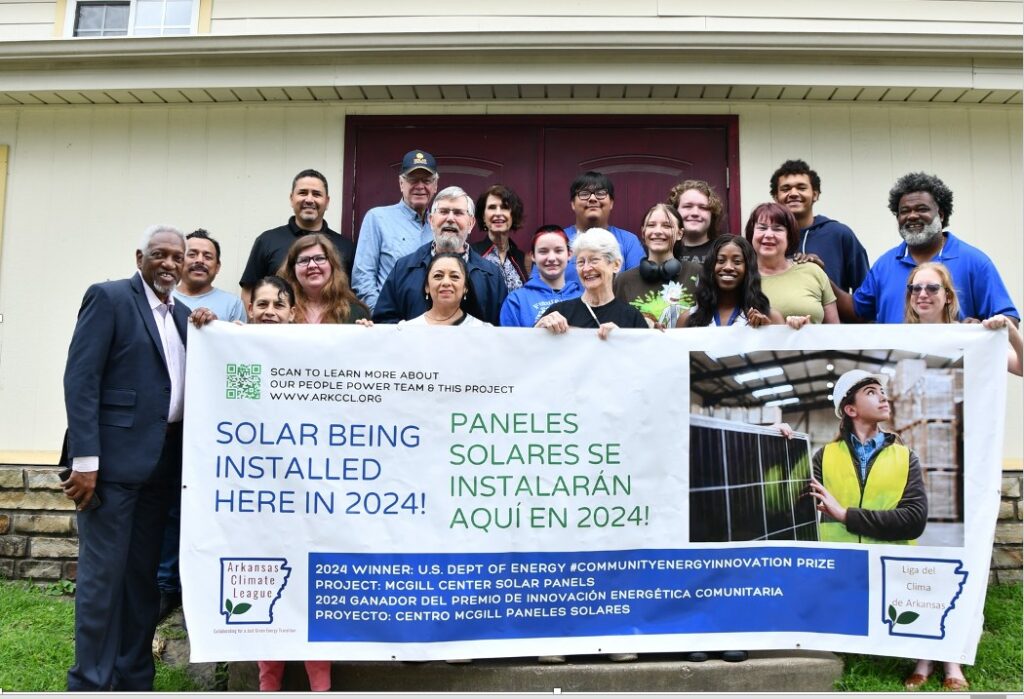
Photo Credit: Arkansas Climate League
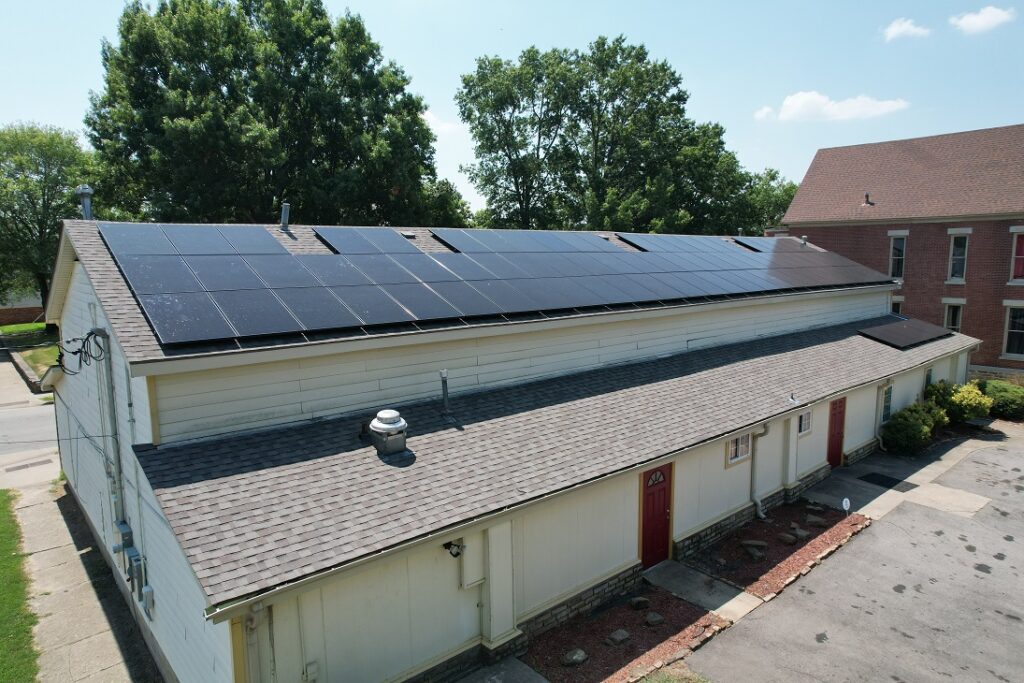
Mission: To provide critical support services including utility assistance, home weatherization, food access, and career development in the green energy sector.
System Design Highlights
Estimated 25-Year Savings: $115,806 (Assuming 3.4% annual utility rate increase.
Environmental Impact
Results:
August 2023 | August 2024 | |
|---|---|---|
Energy Used | 4,139 kWh | 1,331 kWh |
Energy Exported | 0 | 1,673 kWh |
Utility Bill | $676.17 | $55.54 |
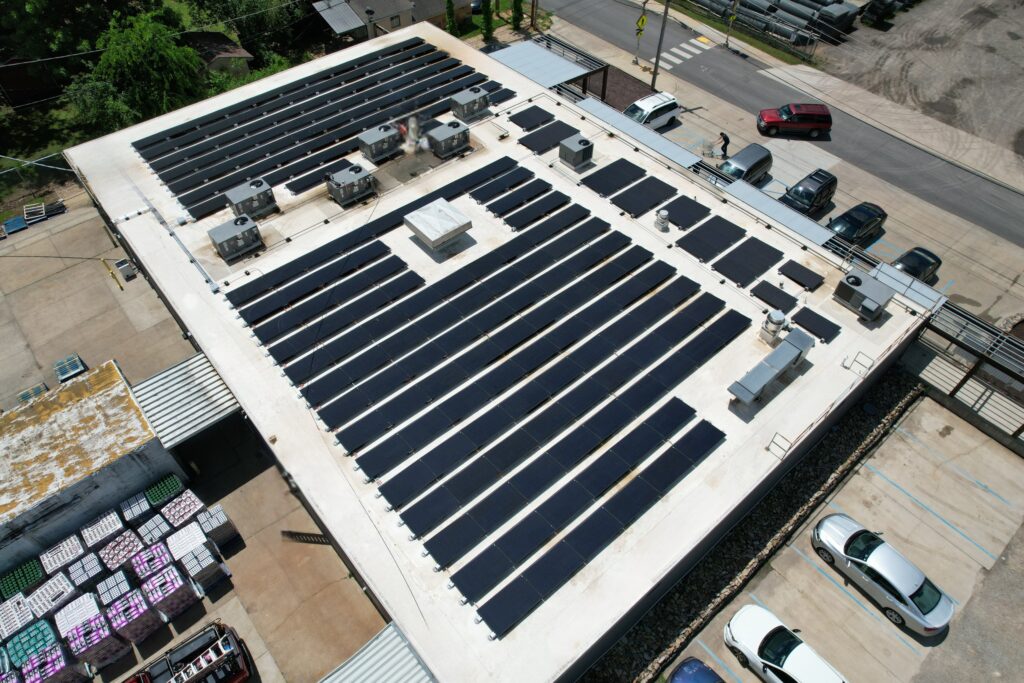
Mission: To nurture mind, body, and spirit through purposeful programs and food assistance.
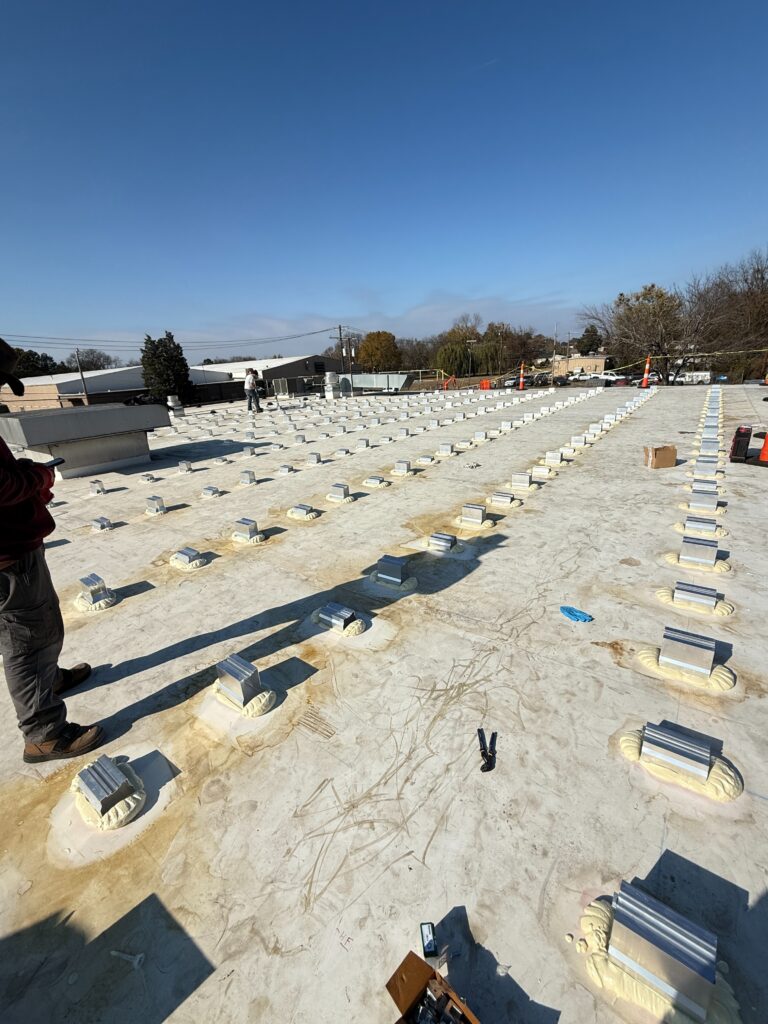
Special Consideration: Flat roof with no rain drainage required non-invasive, foam-based mounting to protect structural integrity.
Phase 1 – December 2024
Phase 2 – February 2025
Environmental Impact
Results:
April 2024 | April 2025 | |
|---|---|---|
Energy Used | 9,760 kWh | 6,960 kWh |
Energy Exported | 0 | 4,482 kWh |
Utility Bill | $834.44 | $348.28 |
Note: $300 flat utility connection fee applied
“Looking at the data, and thank you for showing it to me, I think it’s now that we amplify our voices and share with this region, not only Fort Smith but everyone, the impact that these programs are having on the agencies we call on to help people. These energy savings move funds from a utility bill to a ‘help-mode.’ These resources go right back into the community. If you can save $2,000, that’s an opportunity to funnel that back into the programs of assistance.”
Mayor George McGill of Fort Smith
These projects are a testament to how solar energy can help reduce energy costs and lessen dependence on rising utility prices. While these installations were made possible through grant funding, the long-term savings and return on investment are real and attainable for nonprofits, homeowners, and commercial buildings alike. We’re currently working with four churches exploring the switch to solar, further demonstrating that clean energy is not only financially viable—it also creates a lasting, positive impact in our communities.”
David Stitt, Stitt Solar CEO
Contact us today to learn how Stitt Solar can help you go solar.
Save money & the planet with Stitt Solar